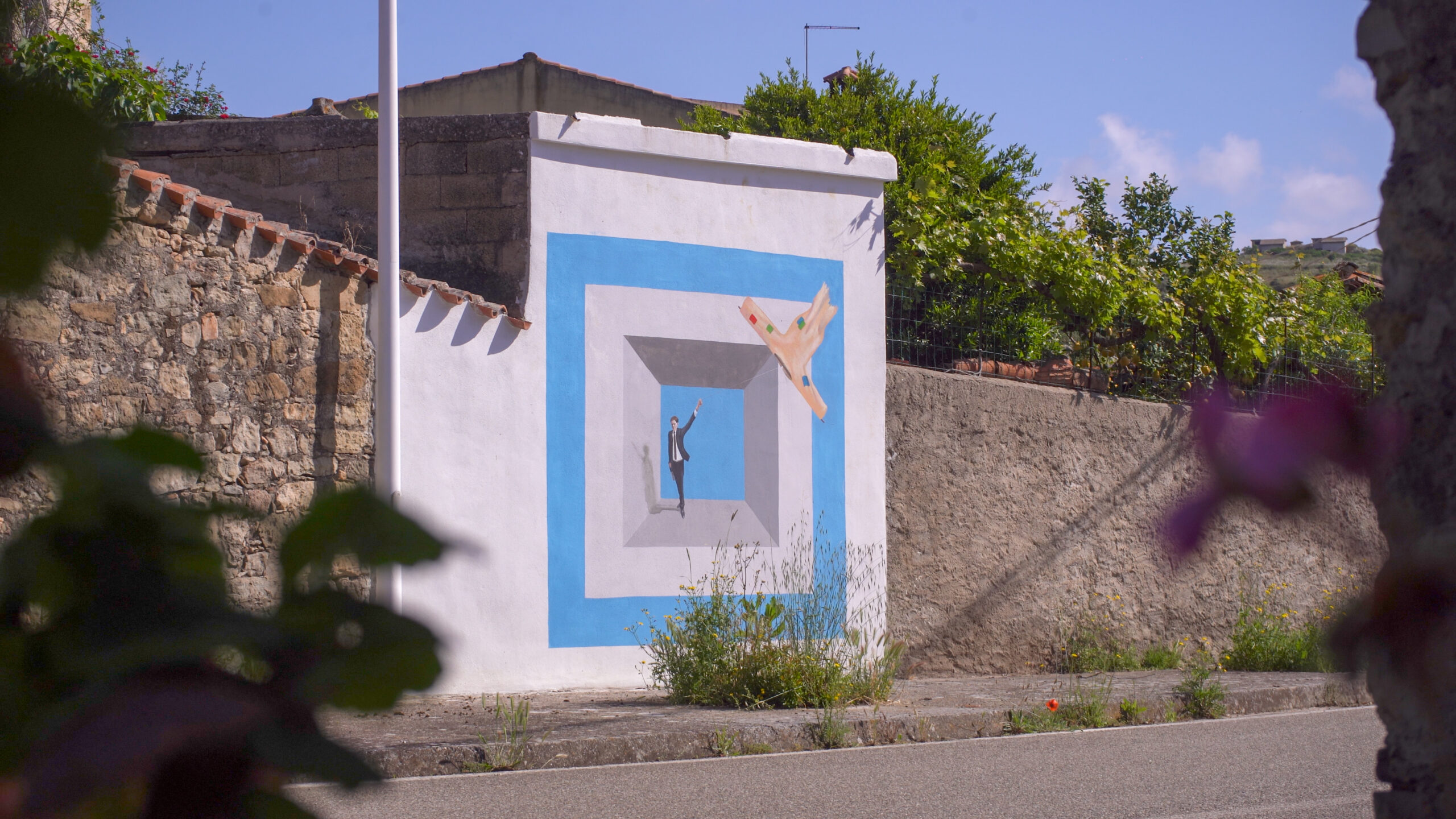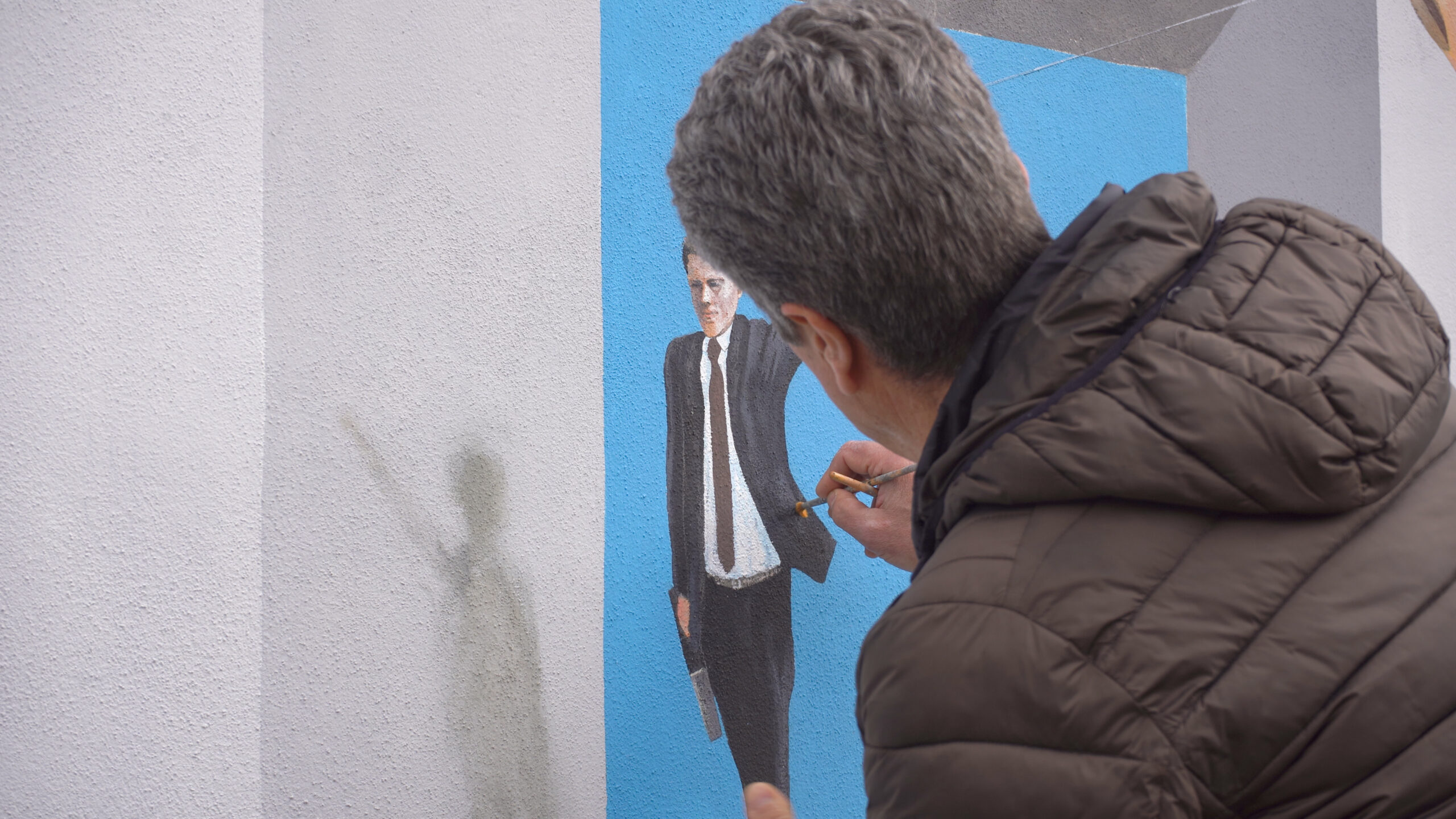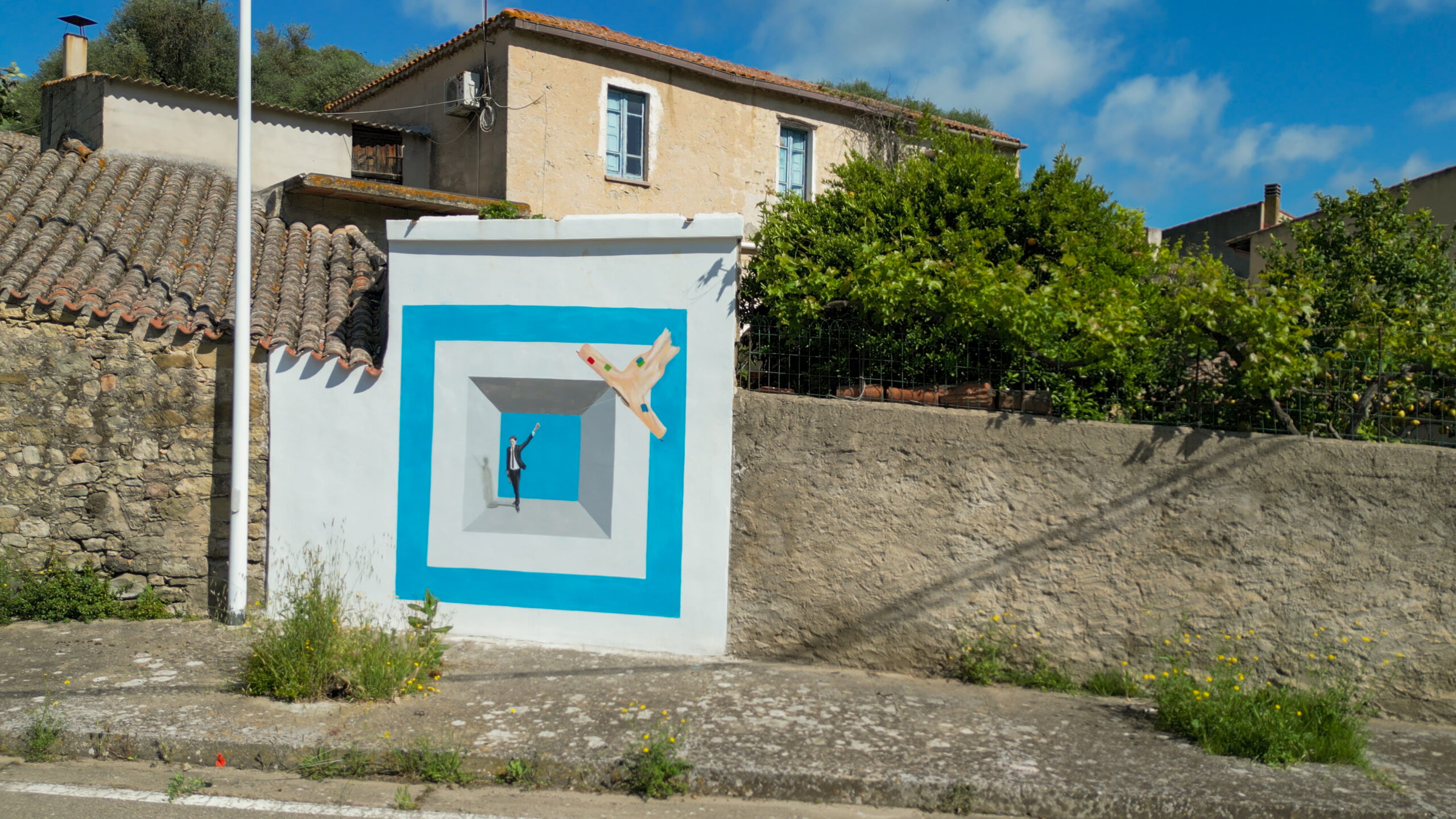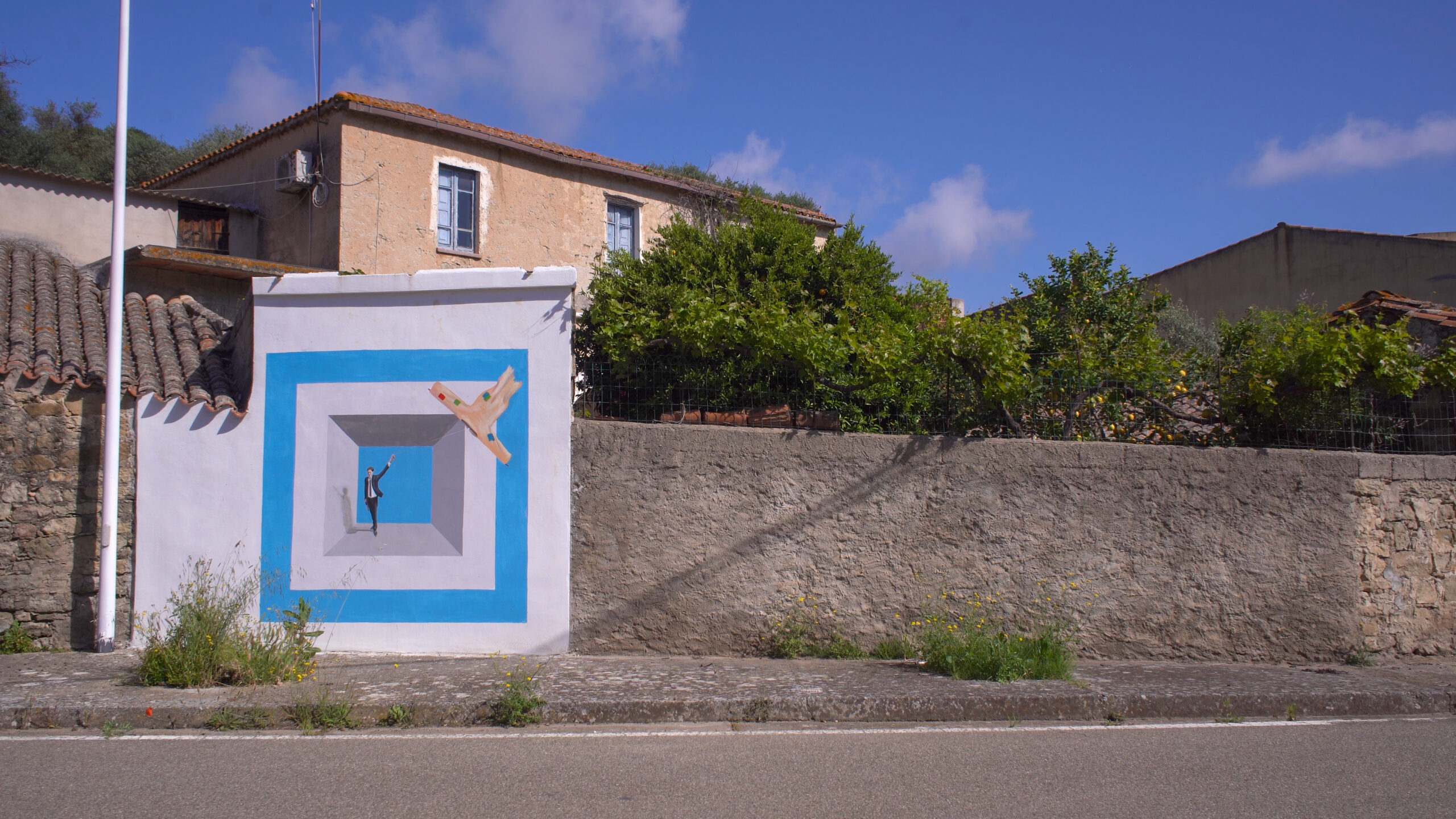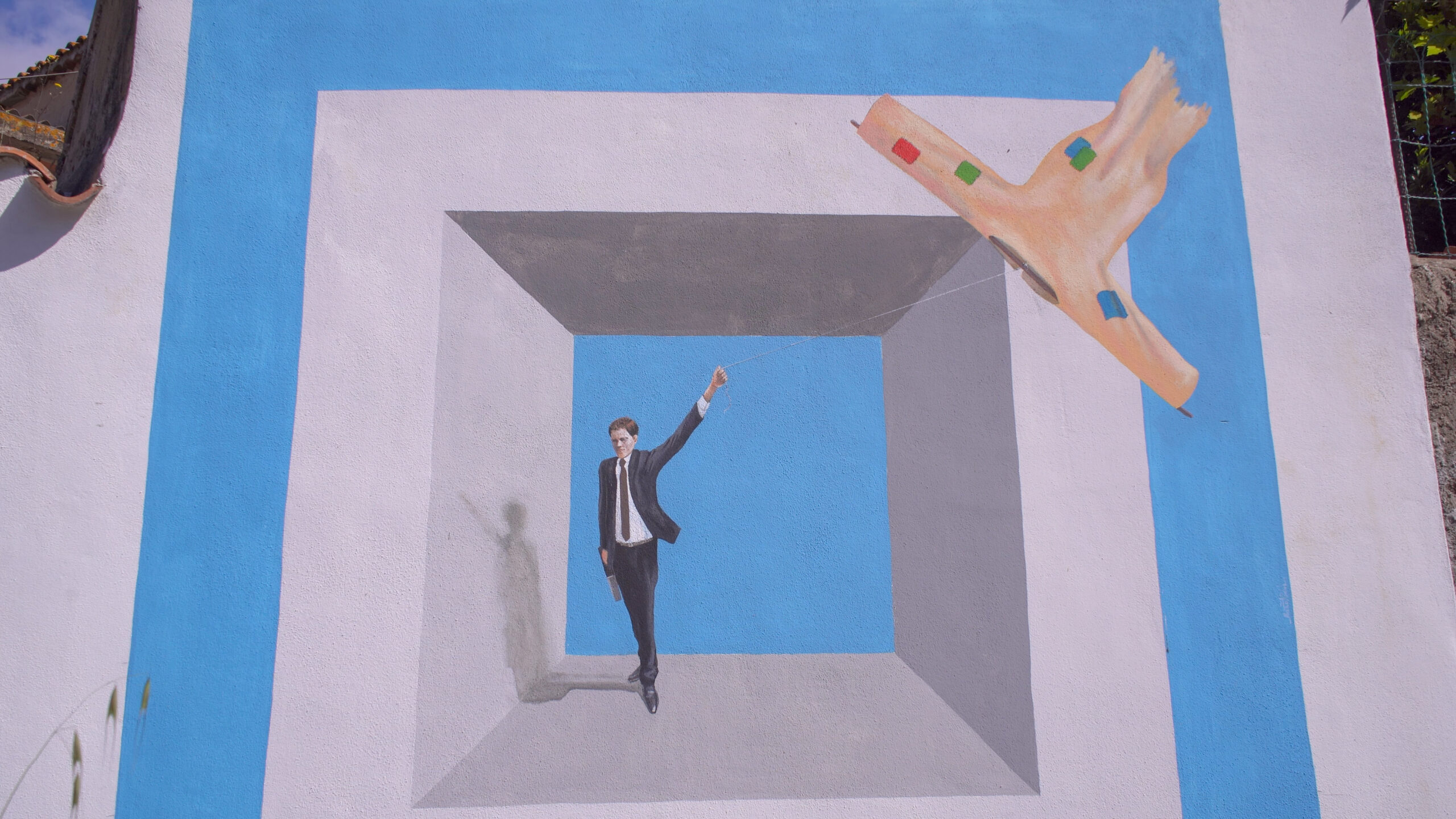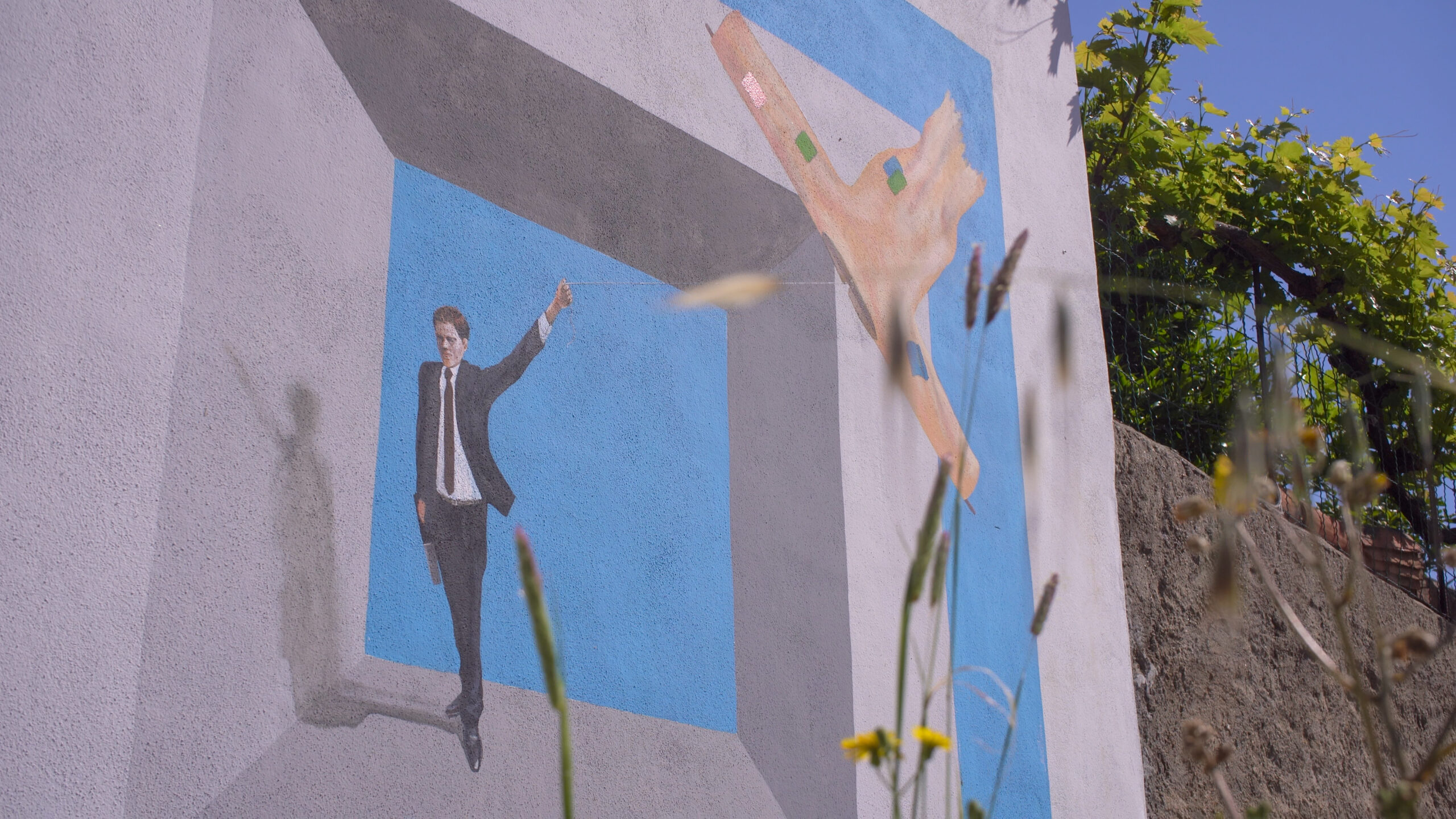
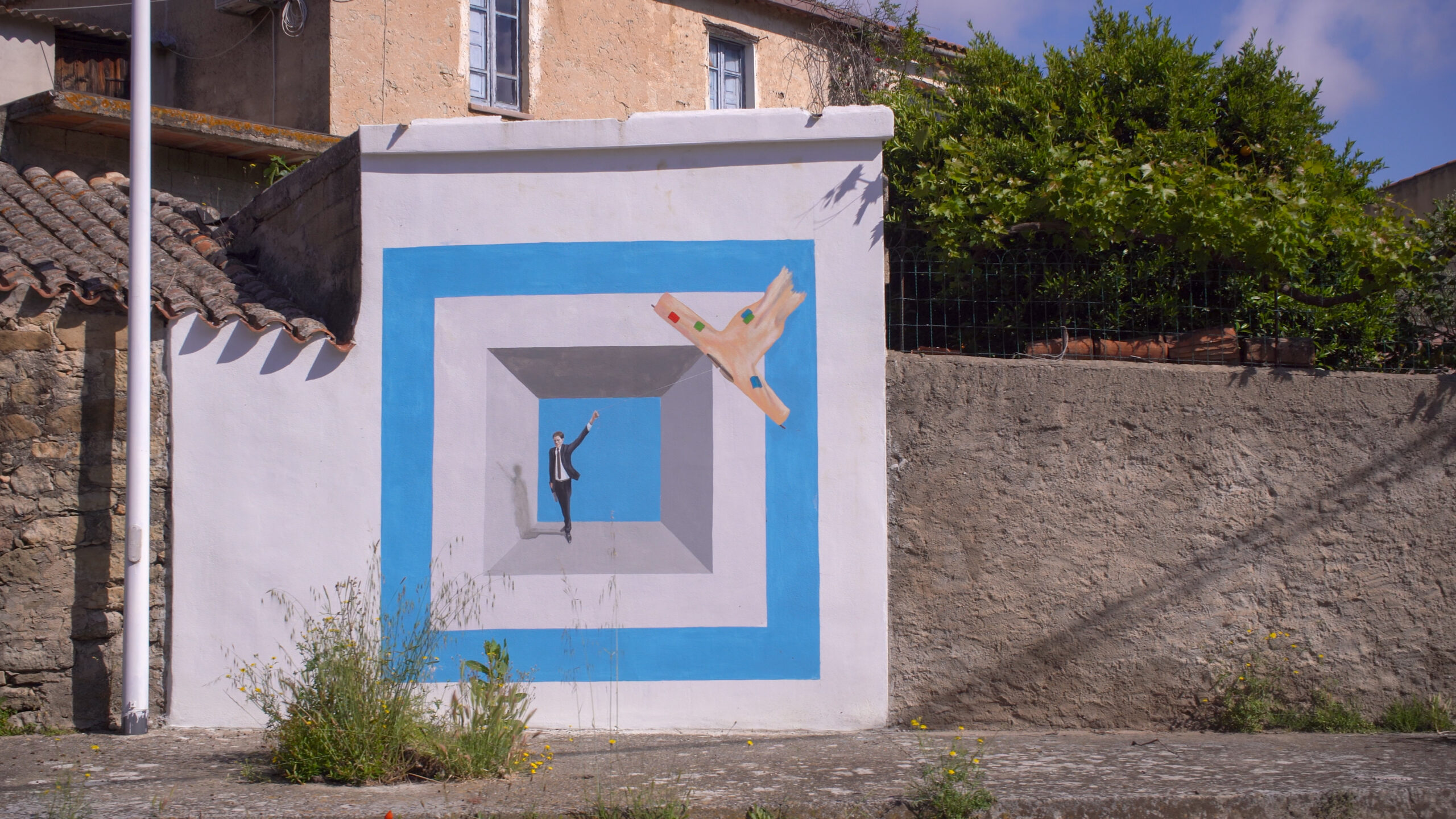
Quest’opera è stata realizzata nel Novembre del 2024 e come per le altre due realizzate nello stesso anno l’artista dialoga sull’attualità del pensiero Gramsciano in un confronto tra ieri e oggi. L’opera si ispira a una lettera del 6 marzo del 24 da Vienna scritta alla moglie Julca. Un uomo in giacca e cravatta tiene a mò di aquilone un cencio che diventa così simbolo di ribellione nei confronti di tutti gli oppressi. Infatti scrive:”Che cosa mi ha salvato dal diventare completamente un cencio inamidato? L’istinto della ribellione, che da bambino era contro i ricchi, perché non potevo andare a studiare, io che avevo preso dieci in tutte le materie nelle scuole elementari, mentre andavano il figlio del macellaio, del farmacista, del negoziante in tessuti. Esso si allargò per tutti i ricchi che opprimevano i contadini della Sardegna ed io pensavo allora che bisognava lottare per l’indipendenza nazionale della regione: “Al mare i continentali”. Quante volte ho ripetuto queste parole”. La sua diventa una risposta agli indifferenti cerca di creare una diga a “Ciò che avviene,” infatti ciò “ non avviene tanto perché alcuni vogliono che avvenga, quanto perché la massa degli uomini abdica alla sua volontà, lascia fare”
This work was created in November 2024 and, as with the other two works created in the same year, the artist discusses the relevance of Gramsci’s thinking in a comparison between yesterday and today. The work is inspired by a letter written from Vienna on March 6, 1924, to his wife Julca. A man in a suit and tie holds a rag like a kite, which thus becomes a symbol of rebellion against all the oppressed. In fact, he writes: “What saved me from becoming a completely starched rag? The instinct of rebellion, which as a child was against the rich, because I couldn’t go to school, even though I had gotten straight A’s in all subjects in elementary school, while the sons of the butcher, the pharmacist, and the fabric shop owner went. It spread to all the rich people who oppressed the peasants of Sardinia, and I thought then that we had to fight for the national independence of the region: ‘To the sea with the mainlanders’. How many times I repeated those words.“ His response to the indifferent is to try to create a barrier to ”what is happening,“ because in fact ”it is not happening so much because some people want it to happen, but because the masses abdicate their will and let it happen.”
Contenuti per approfondire.
Lettera alla sua compagna Giulia Schucht
Vienna, 6 marzo 1924
Mia carissima,
vorrei baciarti gli occhi, per asciugare le lacrime che mi pare di vedere, che mi pare di sentire sulle mie labbra, come altre volte, quando la mia cattiveria ti ha fatto piangere. Ci facciamo male, ci tormentiamo a vicenda, perché siamo lontani l’uno dall’altro e non possiamo vivere così. Ma tu ti disperi troppo. Perché? Mi hai promesso tante volte di essere forte e io ti ho creduto, e credo ancora che tu sei forte, più di quanto tu pensi: spesso sei più forte di me, ma io sono stato abituato dalla vita isolata, che ho vissuto fino dalla fanciullezza, a nascondere i miei stati d’animo dietro una maschera di durezza o dietro un sorriso ironico ed e qui tutta la differenza. Ciò mi ha fatto male, per molto tempo: per molto tempo i miei rapporti con gli altri furono un qualche cosa di enormemente complicato, una moltiplicazione o una divisione per sette di ogni sentimento reale, per evitare che gli altri intendessero ciò che io sentivo realmente. Che cosa mi ha salvato dal diventare completamente un cencio inamidato? L’istinto della ribellione, che da bambino era contro i ricchi, perché non potevo andare a studiare, io che avevo preso 10 in tutte le materie nelle scuole elementari, mentre andavano il figlio del macellaio, del farmacista, del negoziante in tessuti. Esso si allargo per tutti i ricchi che opprimevano i contadini della Sardegna ed io pensavo allora che bisognava lottare per l’indipendenza nazionale della regione: «Al mare i continentali!» Quante volte ho ripetuto queste parole. Poi ho conosciuto la classe operaia di una città industriale e ho capito ciò che realmente significavano le cose di Marx che avevo letto prima per curiosità intellettuale. Mi sono appassionato cosi alla vita, per la lotta, per la classe operaia. Ma quante volte mi sono domandato se legarsi a una massa era possibile quando non si era mai voluto bene a nessuno, neppure ai propri parenti, se era possibile amare una collettività se non si era amato profondamente delle singole creature umane. Non avrebbe ciò avuto un riflesso sulla mia vita di militante, non avrebbe ciò isterilito e ridotto a un puro fatto intellettuale, a un puro calcolo matematico la mia qualità di rivoluzionario? Ho pensato molto a tutto ciò e ci ho ripensato in questi giorni, perché ho molto pensato a te, che sei entrata nella mia vita e mi hai dato l’amore e mi hai dato ciò che mi era sempre mancato e mi faceva spesso cattivo e torbido. Ti voglio tanto bene, Julca, che non m’accorgo di farti male, qualche volta, perché io stesso sono insensibile. Ti ho scritto, ti ho detto di venire perché nelle tue lettere avevo colto l’accenno che tu stessa volevi venire. Ho pensato anch’io ai tuoi: ma non puoi venire per qualche mese? Anche per un periodo determinato credi impossibile o difficile lasciare la famiglia? Come sarebbe bella una nuova parentesi di vita in comune, nella gioia quotidiana, di ogni ora, di ogni minuto, di volersi bene, di essere vicini. Mi pare di sentire la tua guancia accanto alla mia, e la mano che ti accarezza la testa e ti dice che ti voglio bene anche se la bocca tace. Ho avuto un tuffo al sangue, nel leggere la tua lettera. Tu sai perché. Ma il tuo accenno e vago e io mi struggo, perché vorrei abbracciarti e sentire anch’io una nuova vita che unisce le nostre più ancora di quanto non siano unite, o mio amore tanto tanto caro. Ricevo ora molte lettere dai compagni italiani. Vogliono da me la fede, l’entusiasmo, la volontà, la forza. Credono che io sia una sorgente inesauribile, che io mi trovi in una situazione tale per cui tutti questi doni non possano mancarmi e in tale quantità da poterne fare ampia distribuzione. Ed essi sono in Italia, nel braciere ardente della lotta, e sono demoralizzati e sono sperduti. Qualche volta sono angosciato. Ho ricevuto una lettera di una compagna russa che abita a Roma, che e stata la compagna di Rosa Luxemburg e di Liebknecht, che è sfuggita allora per un caso o per uno sforzo inaudito di volontà al massacro e anche lei mi scrive scoraggiata, disillusa: e non e italiana, lei e non può avere la giustificazione del temperamento. Domandano troppo da me, si aspettano troppo e ciò mi impressiona sinistramente. La situazione del partito e molto peggiorata in questi ultimi mesi. Bordiga si è ritirato sull’Aventino e il suo atteggiamento aveva incantato tutto il meccanismo della vita comune dei compagni. Sono riuscito a tempo a strapparne qualcuno da questa situazione: ma basterà? Ho sempre vivo nella memoria il ricordo di una scena a Torino, durante l’occupazione delle fabbriche. Il comitato militare discuteva la necessità, che forse si sarebbe presentata il giorno dopo, di una sortita degli operai armati dalle fabbriche: sembravano tutti ubbriachi, stavano per venire alle mani tra di loro, la responsabilità li schiacciava, li maciullava fino alle midolla. Uno che si levo in piedi – e aveva fatto cinque anni di guerra, come aviatore e aveva rasentato la morte cento volte – barcollava e minacciò di cadere. Con uno sforzo enorme di nervi, io intervenni e li feci sorridere, con un tratto di spirito, e li ricondussi alla normalità e al lavoro proficuo. Ma oggi non saprei più fare così. Nel nostro partito sono tutti giovani, e la reazione, invece di rinsaldare, ha logorato nervi e volontà. Io stesso, perché sono stato male tanto tempo e ancora me ne risento? Anche a me la vita, che sentivo sempre appesa a un filo, per due anni, si e spezzata d’un tratto, dopo il mio arrivo a Mosca, quando ero al sicuro e potevo essere tranquillo. Oggi avrei bisogno di essere estremamente forte: ma come posso, se tu mi manchi, che sei tanta parte di me? Vieni, vieni, Julca, anche per poco tempo, solo che io possa sentirti ancora vicino a me, e riprendere nuovamente uno slancio di lavoro più in alto di quello che ho potuto fare finora.Ti bacio gli occhi, cara, a lungo, a lungo, per darti forza, per scacciare tutti i nuvoloni, perché tu sia forte forte, come puoi essere, come devi essere, mia compagna.
Gramsci
Ti mando il mio indirizzo «perfezionato»: Florianigasse, 5 A, Tur 20, Stock III.
Vorrei avere una tua fotografia più recente, di questi giorni. Ho paura di dimenticarti, di conservare solo l’impressione di te che mi è rimasta dall’ultima sera che ti ho lasciato, quando ero tanto nervoso, tanto scontroso perché non sapevo cosa dirti. Mi avevi promesso un’altra fotografia. Mandamela, e che essa mi annunzi che anche tu verrai.[…] Potresti farmi qualche estratto delle pagine più belle scritte per la morte di Lenin? Vedi che ti credo forte perché ti domando di lavorare per me.
Further reading.
Letter to his partner Giulia Schucht
Vienna, March 6, 1924
My dearest,
I would like to kiss your eyes to dry the tears that I seem to see, that I seem to feel on my lips, as on other occasions when my cruelty made you cry. We hurt each other, we torment each other because we are far apart and we cannot live like this. But you despair too much. Why? You promised me many times to be strong, and I believed you, and I still believe that you are strong, more than you think: you are often stronger than me, but I have been accustomed by the isolated life I have lived since childhood to hide my feelings behind a mask of hardness or behind an ironic smile, and that is where the difference lies. This hurt me for a long time: for a long time, my relationships with others were enormously complicated, a multiplication or division by seven of every real feeling, to prevent others from understanding what I really felt. What saved me from becoming a completely starched rag? My instinct for rebellion, which as a child was directed against the rich, because I couldn’t go to school, even though I had gotten straight A’s in all subjects in elementary school, while the sons of the butcher, the pharmacist, and the fabric shop owner did. It extended to all the rich people who oppressed the peasants of Sardinia, and I thought then that we had to fight for the national independence of the region: “Mainlanders, go back to the sea!” How many times I repeated those words. Then I got to know the working class of an industrial city and understood what Marx’s ideas, which I had read before out of intellectual curiosity, really meant. I became passionate about life, about the struggle, about the working class. But how many times did I ask myself if it was possible to bond with a mass of people when I had never loved anyone, not even my own relatives, if it was possible to love a community when I had never deeply loved individual human beings. Wouldn’t that have affected my life as a militant, wouldn’t that have sterilized and reduced my revolutionary qualities to a purely intellectual fact, to a pure mathematical calculation? I thought a lot about all this and I have been thinking about it again in recent days, because I have been thinking a lot about you, who came into my life and gave me love and gave me what I had always lacked and often made me mean and troubled. I love you so much, Julca, that I don’t realize I’m hurting you sometimes, because I myself am insensitive. I wrote to you, I told you to come because I had understood from your letters that you yourself wanted to come. I thought about your family too: but can’t you come for a few months? Even for a limited period, do you think it impossible or difficult to leave your family? How wonderful it would be to have a new chapter in our life together, filled with daily joy, every hour, every minute, loving each other, being close. I can almost feel your cheek next to mine, and my hand caressing your head and telling you that I love you, even if my mouth remains silent. My heart sank when I read your letter. You know why. But your hint is vague and I am tormented, because I would like to embrace you and feel a new life that unites us even more than we already are, my dearest love. I now receive many letters from my Italian comrades. They want faith, enthusiasm, willpower, and strength from me. They believe that I am an inexhaustible source, that I am in a situation where all these gifts cannot fail me and in such quantity that I can distribute them widely. And they are in Italy, in the burning furnace of struggle, and they are demoralized and lost. Sometimes I am distressed. I received a letter from a Russian comrade who lives in Rome, who was a comrade of Rosa Luxemburg and Liebknecht, who escaped the massacre by chance or through an extraordinary effort of will, and she too writes to me discouraged and disillusioned: she is not Italian, she cannot use her temperament as an excuse. They ask too much of me, they expect too much, and this strikes me as sinister. The situation of the party has worsened considerably in recent months. Bordiga has withdrawn to the Aventine Hill, and his attitude has enchanted the whole mechanism of the comrades’ common life. I have managed to rescue a few from this situation, but will it be enough? I still vividly remember a scene in Turin during the factory occupation. The military committee was discussing the need, which might arise the next day, for an armed sortie by the factory workers: they all seemed drunk, they were about to come to blows with each other, the responsibility was crushing them, grinding them down to the marrow.
One man stood up—he had fought in the war for five years as a pilot and had faced death a hundred times—and staggered, threatening to fall. With an enormous effort of will, I intervened and made them smile with a touch of humor, bringing them back to normality and productive work. But today I would not know how to do that anymore. In our party, everyone is young, and the reaction, instead of strengthening them, has worn down their nerves and willpower. I myself, because I have been ill for so long and still feel the effects? Even for me, life, which I always felt was hanging by a thread, suddenly ended two years ago, after my arrival in Moscow, when I was safe and could be at peace. Today I need to be extremely strong: but how can I be, when I miss you, who are such a big part of me? Come, come, Julca, even if only for a short time, just so that I can feel you close to me again and regain a momentum in my work that is greater than what I have been able to achieve so far. I kiss your eyes, my dear, long and hard, to give you strength, to chase away all the dark clouds, so that you may be as strong as you can be, as you must be, my companion.
Gramsci
I am sending you my “updated” address: Florianigasse, 5 A, Tur 20, Stock III.
I would like to have a more recent photograph of you, taken in the last few days. I am afraid of forgetting you, of retaining only the impression I have of you from the last evening I left you, when I was so nervous, so grumpy because I didn’t know what to say to you. You promised me another photograph. Send it to me, and let it announce that you are coming too. […] Could you give me some excerpts from the most beautiful pages written for Lenin’s death? You see that I believe in you strongly because I am asking you to work for me.
Info sull’autore
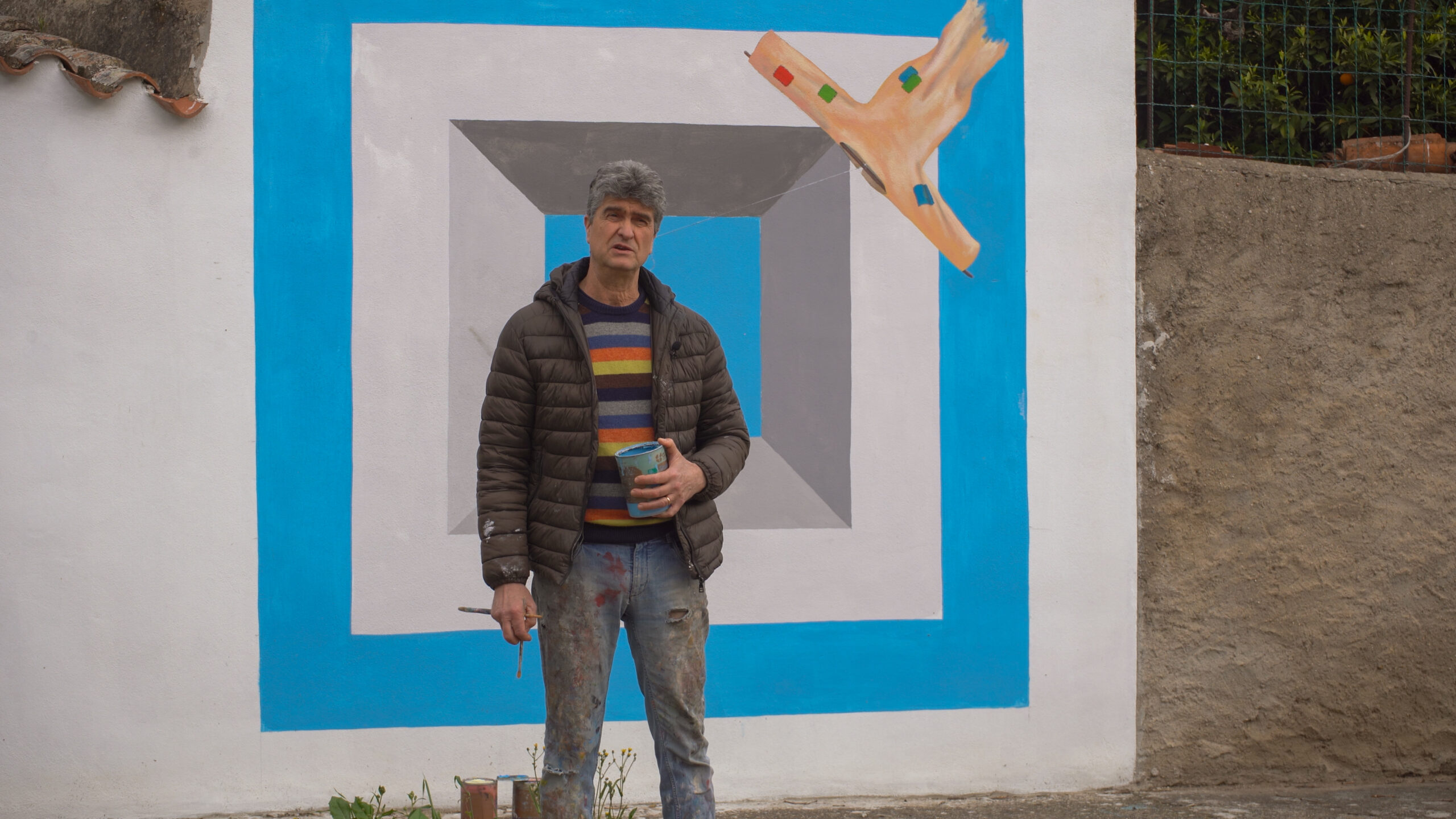
Mauro Podda. Nasce a Terralba il 29.07.1959. Mostra subito interesse verso l’arte e in particolare verso il disegno e la pittura. Nel 1983 prende il diploma geometra, ma è l’arte il suo principale interesse così dopo varie esperienze dal 1990 al 1996 lavora per l’emittente NOVA TV di Oristano come grafico, operatore e scenografo. Intanto tra le innumerevoli attività non abbandona la pittura che rimane sempre la sua passione. Fin da giovane, i suoi lavori pittorici spaziano tra surrealismo magico e realismo. Nella mostra 𝘌𝘴𝘴𝘦𝘳𝘦 𝘧𝘢𝘯𝘨𝘰 del 2014 (Arte 52 – Museo del Territorio 𝘚𝘢 𝘊𝘰𝘳𝘰𝘯𝘢 𝘈𝘳𝘳𝘶𝘣𝘪𝘢), dedicata all’alluvione che colpì il terralbese nel 2013, emergono con forza l’attaccamento alla sua terra, ma anche l’impegno e la denuncia sociale. Nel 2019 partecipa alle manifestazioni di Matera Capitale Europea della Cultura e nel 2021, in collaborazione con la CMA di Oristano, realizza l’installazione in ceramica all’ingresso di Villaurbana. E’ autore di svariati murales in diversi paesi dell’Isola. A Gonnosnò dopo il murale del 2007 nel 2022 ne ha realizzati altri 5 tutti aventi come argomento la vita, l’opera e il pensero di Antonio Gramsci e nel 2023 altri 3.